Funded by the Department for Environmental Protection of the Autonomous Region of Sardinia
PROJECT
►
General objective:
to promote the cultural change required for the transition called for by the 2030 Agenda and contained in the Regional Strategy, fostering increased awareness through education and training.
► Educational project: its main objective is to develop and increase the awareness of students and local communities on the issues of plastic disposal and the risks associated with marine litter, and to make students and local communities aware of reducing the use of plastic, reversing the current trend so that plastic moves from waste to resource, in the circular economy model.
► Recipients of the actions: citizens, schools, young people and administrations.
PLASTIC SPREAD AROUND THE WORLD
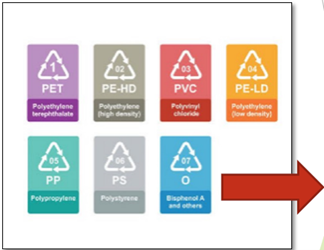
What is plastic?
Why reduce plastic?
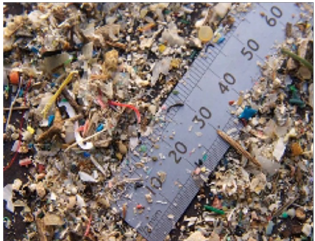
The real problem is microplastics!
Plastic is in fact a non-biodegradable material. With the wear of time, every piece of plastic disintegrates into micro-particles that can be ingested by all organisms, thus entering the food chain.
THE FUTURE IS TODAY
The Plastic Waste Makers Index 2023 declares: «There is more single-use plastic waste than ever before
,
139 million tonnes produced in 2021 alone
».
► Almost all single-use plastics continue to be produced from raw materials of fossil origin: 98% in 2021, compared to 99% in 2019.
► In 2021, the world generated 139 million tonnes of single-use plastic waste, 6 million more than in 2019. Approximately one extra kilogram of plastic packaging waste for every person on the planet.
► If the goal is to reduce waste production, especially the problematic ones linked to single-use plastic, well, then we are on the wrong path!!
VISIONS AND APPROACHES
Relationship between circular economy and sustainability
The aim of the circular economy is to decouple the economic development of businesses and territories from the consumption of finite natural resources…
… consequently, the objectives of sustainability actions are, for example, to reduce greenhouse gas emissions.
EUROPEAN REGULATIONS FOR REDUCING PLASTIC
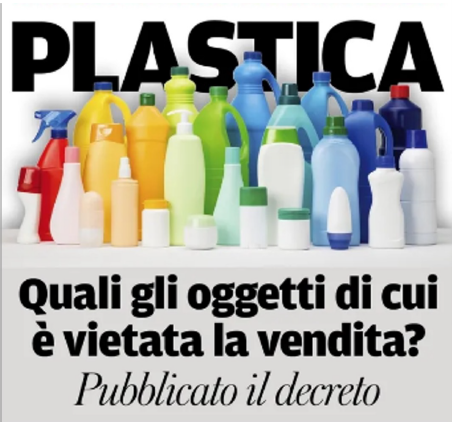
► SUP (Single Use Plastics) is a 2021 European Union regulation that prohibits the use of certain single-use plastic products for which alternatives exist on the market.
Visit the website: https://www.governo.it/sites/governo.it/files/DLGS_DIRETTIVA_2019_904_RI.pdf (opens in a new window)
PROJECT ACTIONS
Action B3: Activities for institutions
Action B3 aims to launch an exploratory survey aimed at the public administration staff employed at the offices of the Municipality of Cabras. The activity will involve the institutions on the topics related to the European Directive in force (EU 2019/904), regarding the proper reduction and use of single-use plastic objects and/or plastic objects composed of materials with widespread microplastic dispersion in the territory. The aim of the action involves strong awareness-raising through a meeting dedicated to the impact of plastic on biological communities and the environment. The meeting will be held by a specialised biologist. The information activity will be combined with the administration of questionnaires in order to assess how the Minimum Environmental Criteria (MEC) influence purchasing choices and administrative management, and how these have brought about changes in the territory before and after the entry into force of the regulations, in line also with the reference plans of the Regional Strategy for Sustainable Development (SRSvS).
The project action is networked with: CEAS Acqua Durci – Chia of Domus de Maria, CEAS Sant’Eru Capo Mannu and CEAS Aristanis.
Action B4: Experiential activity – for the general community
The activity provides for a meeting to present and distribute the “Sailor’s Kit” to recreational boaters, fishermen and nautical operators who carry out their activities in the waters of the Sinis Peninsula – Mal di Ventre Island Marine Protected Area and in the Gulf of Oristano.
The Sailor’s Kit consists of: an adhesive ten-point list of good practices, a compostable tableware kit, an absorbent cloth for the bilge, a cotton food bag, environmental information material, luffa (vegetable sponge), a steel water bottle, a bamboo ashtray, natural soap, a jute container bag. The kit is intended as a useful tool for promoting more sustainable navigation experiences. The meeting will be led by a professional educator and a specialised marine biologist, during which the contents related to anthropogenic pollution, loss of marine biodiversity and the navigation techniques to be adopted in the Marine Protected Area will be conveyed. The activity aims to start a mutual sharing of critical points and strengths and to define the
best practices
for the protection and conservation of the coastal marine ecosystem.
Action B5: Production of artworks – Activity for school-aged children
The activity provides for the implementation of a technological recycling laboratory aimed at students of 2 classes of the Cabras Comprehensive Institute. The creative laboratory will be set up at the school premises and will involve the children in playful and recreational activities on the themes of recycling and the circular economy. The activity will be led by specialised personnel who will illustrate the function of the machinery used (CNC milling machine) and the relevant procedures in all phases of production. During the activity, new objects will be created starting from the plastic caps collected in action B6 (as follows). The objective of the activity includes awareness-raising and reflection actions on the opportunity to “give life” to objects starting from the concept of “waste” in a circular economy perspective; at the end of the laboratory the products will be donated to the class.
Action B6: Waste collection activity – Activity for all users
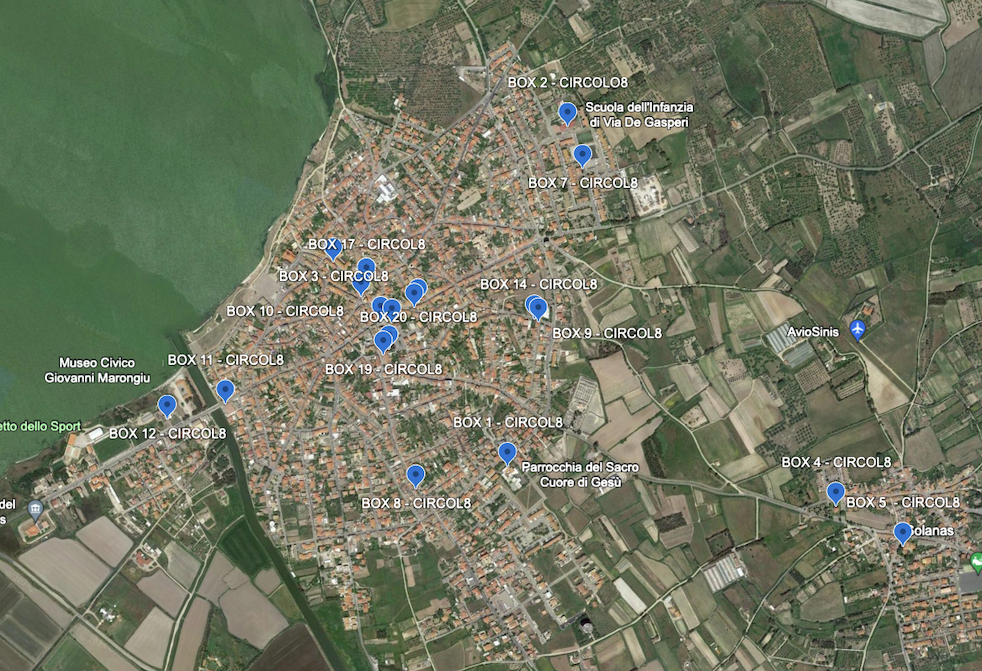
The action provides for the collection of plastic bottle caps. Some collection stations will be identified in different points of the town, including schools, food and beverage businesses, accommodation facilities, and municipal premises. All material collected at the stations will converge at the MPA headquarters. Laboratory activities dedicated to cleaning, disinfection and sorting by colour type of the collected plastic caps will follow. The aim is to raise awareness on the management and use of plastic waste and on the value of recycling; to broaden knowledge on the new technologies currently available in order to give new life to plastic objects in line with the principles of the circular economy.
The activity is in collaboration with the CEAS that participate in the INFEAS network project:
CEAS Aristanis, CEAS Tempio Pausania.